 TCCFP
The residential shield: Tradeoffs in urban red fox selection across spatial scales suggest a human shield from coyotes
Date:
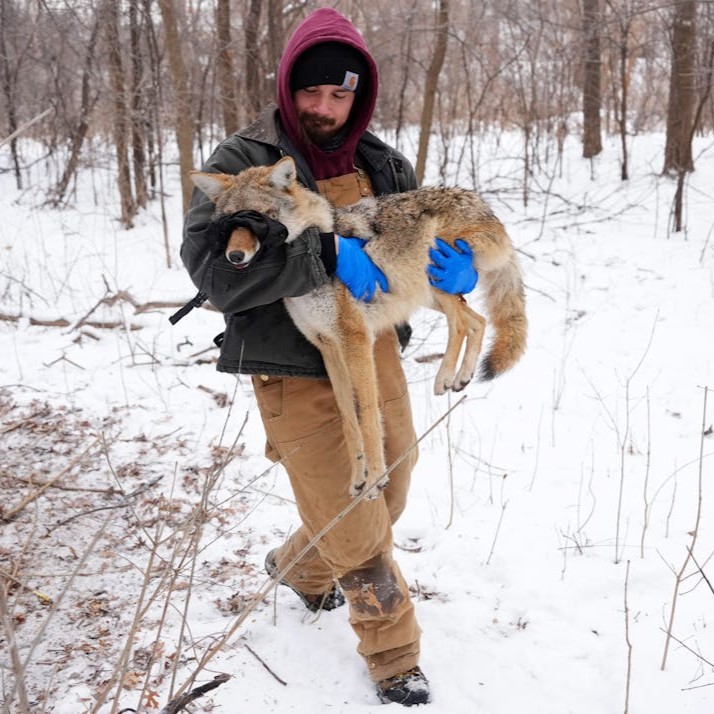
Risks posed by predators can create a “landscape of fear,” which occurs when animals change their space use and activity patterns in response to perceived predation risk. When predators respond to an anthropogenic landscape of fear, species affected by that predator may preferentially use areas with high human use and activity in a phenomenon referred to as a “human shield effect.” Coyotes (Canis latrans) pose a mortality risk to red foxes (Vulpes vulpes), which should theoretically avoid coyotes either spatially or temporally to reduce this risk if a human shield is occurring. To test whether red foxes living alongside coyotes in urban landscapes benefit from a human shield effect, we analyzed how human recreational activity and development at multiple scales affected the movement and activity patterns of 31 coyotes and 27 red foxes in the Twin Cities Metropolitan Area of Minnesota, USA, using second- and third-order resource selection functions. Our results indicate that red foxes and coyotes primarily diverge in their use of urban landscapes through selection of territories with high and low residential zoning, respectively. Both species’ use of landscapes within their territories and high nocturnality indicate human use and temporal activity are primary drivers of spatiotemporal activity at that scale. These results indicate a tradeoff in red fox use of urban landscapes across orders of resource selection, supporting the hypothesis that they select territories in proximity to human residences as a shield from coyotes which dominate spaces with lower human footprint.